Tuesday, July 26, 2016

Uncertain Health in an Insecure World – 89


“Much Fanfare”


Data don’t matter much. We filter the evidence through our own beliefs. The process simply confirms our pre-existing biases.


Fanfare is the new data – “a loud, proud burst of something to get attention” – spotlights, trumpets, musketry or media. There may be MUCH or little fanfare regarding the promise of different things. And the fanfare repeats – precision medicine… big data… internet-of-things… digital health… artificial intelligence… innovation… Cloud data sharing.


The present pace of scientific progress is truly unparalleled. The march of technology is steadily quickening. Unbridled computational power is generating limitless data. 

The promise of all this progress sets social media influencers abuzz.

API-backed apps pulse through insecure mobile devices, and endless memes clutter our culture. Digital health saves some lives, and will surely improve the quality of the rest. It could happen! But until such progress is realized and broadly adopted, is it hyperbole… a distraction… or a public nuisance?

Does such technology actually make us better… individually or collectively? And what happens when while making progress, society fails to deliver on the basics… foundational institutions… the family unit… personal safety?

The same World Wide Web that connects us makes state-sponsored personal surveillance possible.

Many of our modern life-enhancing technology crutches – the Internet, Siri, Windows’ UI – are U.S. Department of Defense DARPA-funded by-products of military efforts to launch rockets and protect our national security. Semi-autonomous machines – drones -- have taken out >120 ISIL commanders during President Obama’s administration, often with collateral damage (below). U.S. Special Forces have stealth technology’d their way into the Syrian conflict. International financial cyber-security interdiction is starving ISIL’s cash reserves and payoffs.


Google has a very complicated relationship with global governments and local law enforcement.


At the 6th European Data Protection Days in late April in Berlin (after the Paris & Brussels attacks, and before Nice & Munich), Giovanni Buttarelli, the EU data protection supervisor, noted that “The digital world is globalized, so data protection should also be globalized.” Google’s Global Privacy Counsel Peter Fleischer was there to debate the point.


Israeli start-up Waze Mobility sold its GPS navigation app to Google in 2013 for US$966M. Millions of law-abiding drivers now use its way-finding and radar speed trap detection capabilities. But in 2015, U.S. police associations wrote to Google CEO Larry Page to express their concerns that Waze will be used by domestic jihadists for “police stalking.” The police have reason to worry, it now seems.

Differences in national threat levels have created global policy divides over digital privacy rights.


ISIL-inspired terror in Europe is now outpacing that in post-9/11 America. Still reeling from recent attacks where terrorists communicated digitally, the EU continues to go hard after U.S. tech giants playing in Europe’s back yard (Google, Amazon, Facebook) for how they harvest and handle people’s digital data.  Pro-privacy EU policies protect all European residents from privacy invasion, without preventing Internet-inspired and cellphone-coordinated terrorism.

ISIL radicalizes its recruits with the Internet and social media – finding foot soldiers, broadcasting public executions, spreading propaganda, and transacting illicit petro-commerce.

Regardless of personal privacy policies and corporate regulatory regimes, both the U.S. and Europe have suffered deadly urban warfare fomented by jihadists who were radicalized on line, and terrorist attacks engineered using real-time digital platforms. Of course, Brexit won’t change this…


After the 15th ISIL-inspired U.S. mass shooting since 2009 (above), President Obama again approached the microphone and lamented the fact that the very technology that searches out and destroys terrorists is now used by terrorists. He noted that ISIL’s “propaganda, their videos, their postings are pervasive and more easily accessible than we want.”

When violence comes home, shocked, we suddenly care, and lift up our heads from our mobile devices.

In April in Berlin, President Obama said, “I want to say this to young people who value their privacy and spend a lot of time on their phones: The threat of terrorism is real.” Later in Hanover, President Obama said, “We care about Europeans’ privacy, not just Americans’ privacy.”


Returning early from a Warsaw NATO summit (after Orlando & Dallas, and before Baton Rouge), President Obama observed that, “the (Orlando Pulse nightclub) killer took in extremist information and propaganda over the Internet … (and) became radicalized.”

Politicians think and speak differently when The Homeland is attacked. But do their actions reflect reality?


Donald Trump’s raucous Republican convention featured the first openly gay speaker (Peter Thiel of PayPal, Palantir, Clarium Capital; above) and a return to a surreal Nixon-esque law & order theme. Hilary Clinton’s Democratic convention is underway, but her “unacceptable lack of (email) transparency” in foreign affairs and her party’s Watergate-esque real domestic dirty tricks and document leaks remain political liabilities. It may have been dark in Cleveland, but it's not always sunny in Philadelphia.


In President Obama’s response to the July Munich shopping mall shootings (after Cleveland, and before Philadelphia), he expressed sympathy, joked awkwardly about his daughter leaving for college, then reflected seriously on how America’s domestic security, “depends on law enforcement… under some of the most adverse circumstances imaginable at times…” In their own special ways, each candidate will promise to make us all safer, just as President Obama did in 2009, when he said that, “the time has come to set aside childish things.”

Our curious world is continuously engaged in rediscovery… Some call it progress.

Zealots, influencers and politicians alike promise much… virgins, relevance and prosperity.

We take what they promise on faith… a naïve childlike belief in a better future.

The recent past influences the way we perceive the present.

And trumping all evidence, our biases continue to shape the way we imagine the future.


Like you, we in the Square watch the balloons drop and endure the speeches. But in a world often lacking civic-ness and civility, sometimes the promise of progress needs no fanfare.


Tuesday, July 19, 2016

Uncertain Health in an Insecure World – 88


“AdVenture Capital”


If you already play Pokéman GO, then skip the next paragraph.


If not - Pokéman GO is an augmented reality game released earlier this month by a Google startup, Niantic Labs. The virtual world GPS mobility experience is so engrossing that two San Diego men fell off a Pacific coastal cliff while playing, while others have caused car accidents or been stabbed by muggers. Banned as disrespectful in the Washington D.C. Holocaust Museum and Arlington National Cemetery, Canada is considering whether it’s an invasion of privacy. One alien-seeker who found Pikachu in New Mexico’s Area 51 (below) worried that, “Pokéman GO is a government surveillance PSYOP conspiracy.”

   
How you perceive a game is how you play it.

Venture capitalists use other peoples’ money in a high-risk search for market-changing products. This real world startup life & death adventure could well be confused with game play.

How you play with venture capital is how you perceive it. 

Capitalist Bill Gates was recently asked by Bloomberg's Erik Schatzker what the Darwinian venture capital (VC) environment meant to medical research, bio-engineering and biotech. The Billionaire's response was... well, interesting. "Capitalism in general underfunds research because the benefits to society are much greater than what the innovator captures." So, Bill... You're saying that society doesn't need VC to improve.


Philanthropist Bill Gates followed up by observing, "The other thing that's underfunded is things that benefit people with very little money because their voice in the marketplace is weak." And that's why the Gates Foundation funds safe, low-risk vaccines for the Third World. 

The VC meat grinder that chews up entrepreneurs is clearly more interested in innovation than research.

Toby Coppel, co-founder of the highly thought of London-based early stage VC Mosaic Ventures, recently blogged, “the vast majority of start-up firms should not take money from our industry.” Most entrepreneurs crave independence; so much so that only one of every 2,000 U.S. start-ups takes VC cash. In fact, family & friends and personal savings account for 11x more startup funding than does VC. And before the Brexit misadventure began, EU seed investors funded >2,000 tech startups, of which <16% went on to raise Series ‘A’ funding. 
    
According to Texas Mercom Capital Group, the health IT sector bucked this VC trend in 2016.


Health IT rapidly expanded by 27% in the first quarter of 2016 (versus 2015), delivering $1.4B to 146 VC deals. Healthcare practice companies received 42% of this funding ($569M in 49 deals), while consumer-centric firms received 58% ($796M in 97 deals). Within these categories were wearable tech/sensors ($260M), data analytics ($197M), telemedicine ($171M), mobile health apps (mHealth, $120M) and consumer health information/education ($100M). Beyond early-stage deals <$2M, the big winners were Flatiron ($165M), Jawbone ($165M), Healthline ($95M), Health Catalyst ($70M) and inviCRO ($46M). An all-time high 58 M&A’s occurred among mHealth, practice management, personal health, data analytics, EHR and telemedicine companies – IBM bought Truven Health Analytics for $2.6B, while Allscripts paid $950M for Netsmart Technologies.

Big data analytics giants like Alphabet and Facebook are playing the internal startup game.


Evidation Health, a company started up by a $6.2M GE Ventures and Stanford Health Care VC Series ‘A’ round, raised $11.6M in June with a financing round that attracted Facebook’s VC shop (B Capital Group, set up by FB co-founder Eduardo Saverin). This company has the potential to tackle an emerging digital health technology problem – how to assess endless emerging tools and apps for their actual utility in improving health outcomes. In hyperbole typical of digital sector CEO’s, Evidation’s Deborah Kilpatrick gushed, “The company has the core capabilities to make precision digital medicine a reality. We envision a digital health-enabled future where clinical interventions can be customized and concentrated in ways that maximize clinical and economic benefit for payers, providers, and most importantly, patients.”

Nice pitch, Deborah.

 
In the pharma and biotech sectors, the IPO heat and VC sizzle that characterized 2014-15 has given way to a 2016 chill. Despite a brief 2015 year-end rally, an early 2016 slide in stock prices has nearly wiped out a year’s worth of Nasdaq biotech index gains (below).  Before this, a total of 17 exiting companies received big floats >$100M in 2015. The top five 2015 biotech VC deals of >$200M each were Moderna, Acerta, Immunocore, Stem CentRx and Denali. In the final quarter of 2015, biotech IPO’s (excluding medtech) fell on all western exchanges.


Year-to-date market volatility and economic concerns have been acutely worsened by the Brexit vote. 

Even in 2015, EU-originated companies were under-represented in the top global VC deal ranks, although UK’s Adaptimmune raised $191M prior to its early 2016 listing on Nasdaq. As the IPO window closed in late 2015, the UK’s Shield Therapeutics and Apellis pulled back their float plans. Shield IPO’d in early 2016, while Apellis sought another VC round to get its rare disease treatments further advanced in the US. While EU companies were a small fraction of 2015’s disclosed VC funding rounds, the average EU round was $36M versus $24M in the U.S.

In 2016, the air came out of the biotech valuation bubble. At the end of the 2nd quarter, VC had invested $15.3B into 961 deals, down -12% and -22% from the same quarter in 2015.


The soul-crushing downturn has affected both biotech and med-tech.

In the immune-oncology pharma sector, 2015 valuation expectations outstripped 2016 product realities. And eased FDA approvals in 2015 launched new blockbuster drugs into an adverse 2016 pricing and reimbursement climate. Persistent global instability and post-Brexit EU market uncertainty aren’t going to help matters.

Biotech VC players are becoming less adventuresome and more exit focused.

Companies pursuing their end games – either IPO or acquisition – are in need of second or later round investments.  In 2015, Series ‘A’ rounds declined in favor of later stage ‘B’ and ‘C’ raises, representing less than one-fifth overall.  Biotech’s 2016 decline saw risky IPO’ing companies launching into a falling stock market, which has further soured investors.

A safer mode of exit – sale – appears to be the smart play for early stage biotechs in 2016.

It’s just 110 days to the US Presidential election. If Hillary Clinton beats Donald Trump, Obamacare gets a new life. Until then, post-Brexit uncertainty will further reduce biotech VC enthusiasm and slow IPO exits. Smaller pre-revenue start-ups are hunkering down and cutting their cash burn rates. “Who knows when we will be able to raise money again,” said one worried financial analyst.

Game theory is “the study of mathematical models of conflict and cooperation between intelligent rational decision-makers.” EU game theorist were playing hard in the days leading up to June 23, 2016.


How you play a game is how you perceive it.
 
The Square is chock-a-block full of gamers, some seeking adventure, others just looking to exit.

One capital proposal is to issue free Pokéman GO games to ISIS, and watch them walk over the cliff.


Tuesday, July 12, 2016

Uncertain Health in an Insecure World – 87


“Luddites”


In early 19th century England, bands of workers called Luddites destroyed textile factory machinery that threatened their job security. Followers of mythical Leicestershire-man Ned Ludd (below), the Luddites were accused of criminal activity by the British government, and labeled “small minded” by business magnates for their violent resistance to technological progress.


The Industrial Revolution validated the Luddites’ fears about job losses and working conditions.


In early 21st century America, Dr. James Madara, CEO of the American Medical Association (AMA, above), the world’s largest physician advocacy group, referred to digital health technology as “snake oil.” His position was provocative by design, suggesting that the AMA would save the profession from this looming threat.


The first snake oil formulation dates from the 7th century B.C., when it was used to treat arthritis. To this day, medicinal uses of snake venom for blood clots, cancer, etc. are under active study.


On hearing Jim Madera’s snake oil quip, digital health technology mavens were up in arms, and critical of the AMA for taking a regressive analog worldview. Paul Sonnier (below), leader of a 47,249 member DIGITAL HEALTH LinkedIn group, was one strongly outspoken critic, noting that the AMA’s new president “has admitted that he doesn’t even use an EHR in his own practice.”


But like snake venom, digital health technology is complicated… and all science-y.

And to be fair and accurate, Madara criticized marginal digital products, saying “From ineffective electronic health records, to an explosion of direct-to-consumer digital products, to apps of mixed quality… This is the digital snake oil of the 21st century… It’s like trying to squeeze a 10-gallon product idea into a 2-gallon health care knowledge base… digital tools that make the provision of care less, not more, efficient.”

Most digital health-tech companies are trying to deliver real tools, not toys.

Regulators at the U.S. Federal Trade Commission (FTC) have singled out a few bad actors. FTC’s Bureau of Consumer Protection Director Jessica Rich stated, “Truth in advertising laws apply in the mobile marketplace.” But FTC fines for MelApps and Mole Detective ($17,963 and $3,930, respectively) for false claims on skin cancer detection seem more symbolic than material.

Modern healthcare reimbursement has forced a digital culture change on medical practice.

Healthcare insurers require that doctors and health professionals use EHR’s if they wanted to be paid. Meaningful EHR use has now been linked to the “value” movement, that is as much about conforming to new cost curve-bending reimbursement policies as it is about healthcare quality. Having trained on and used three different EHR’s in two countries in the past five years, I can personally attest to their pros and cons. Early adopters and champions are keys to digital health technology approaches becoming reality. But even these advocates would have to admit that the lack of EHR interoperability and endless system upgrades negatively define this digital medical marketplace.


At the June 2016 Digital Life Design (DLD) Conference, Seimans AG President Joe Kaeser (below) predicted that the value chain in healthcare will be cut in half in the next ten years by digital technology. “Speed is the favorite of strategy consultants”, said Kaeser. “But speed just gets you to disaster earlier.” And when considering how big incumbent companies survive, “Size doesn’t matter… Adaptability is the answer.”

“Managers who grew up in hierarchical system, getting it into their brains is the challenge.”


Kaeser sees digital factories transforming industry from experience-based to knowledge-based platforms. For example, optimization of the power grid has moved big power plants at the center of distribution grids (supply-based) towards distributed energy sensing (demand-based) and real-time utilization (conservation-oriented) models.

Paradigm shifts are occurring in digital machine technology.

Kaeser predicts the growth of stress-less autonomous vehicles, and an end to car ownership. But a Model S Tesla driver was killed in May in Florida watching a Harry Potter movie while using the Autopilot™ function. A Tesla spokesperson attributed the crash to a sensor failure (below) in detecting an 18-wheel truck against a bright sky, noting that there were 130,000,000 miles of Autopilot™ use before one tragic death.

This first reported autonomous car driving death will not be the last.


What does the future of corporate innovation look like?

What Kaeser called “Interesting Seimans,” a disruptive new subsidiary named next47 (€1B investment to begin in Oct. 2016) is replacing “Boring Seimans.” Seimans AG has 350,000 world-wide employees; next47 will have offices in Berkeley, Shanghai and Munich. next47 presents the technology giant (founded as a telegraph startup in 1847) with an internal culture clash that previews eventual corporate culture change. At “Boring Seimans”, inventions were held close and patents tightly protected; still, it spun off >180 high-tech startups. next47 data must be shared and ideas opened up, in the free spirit of startups.


Digitalization requires a change in mentality, to be both socially accepted and adopted by people.

But post-Brexit Europe and post-Bernie Sanders America have a problem, and presents a challenge…  Society has lost its enthusiasm. The very fact that a self-declared socialist was a U.S. Presidential finalist reflects the transformation from the American dream of widespread wealth into a nightmare of economic exclusion.


In this prickly environment, political and corporate leadership must clearly explain what digitalization is all about… for individuals and for society. Does digital efficiency simply mean broad job losses? Do AI, blockchain and autonomous machines portend the end of the middle class?  Does digitalization elevate one person into wealth, while nine fall by the financial wayside? Will there be any personal resources left to buy the benefits of digitalization on Amazon?

Failure to manage the digital message will create… no, has already created societal unrest.

When President Kaeser welcomed President Barack Obama to the Seimans AG plant in April 2016, he only had a few minutes to relate the relevance of global digital engineering to the leader of the free world. Kaeser saw two options: 1) tour Obama through the company’s physical plant to highlight its many impressive technologies, or 2) tell a story of “digitalization at work.” He chose that latter.

With Chancellor Angela Merkel cringing nearby, Kaeser described how Seimans software was helping Callaway Golf (Carlsbad, California) to simulate new golf club performance before production. He explained how his digital company offers a simulation tool that measures the human interface with the club, to individualize the club for use by one golfer… And all for almost the same price as factory stock production.


The message to one amateur golfer was as simple as placing a “Yes We Can” 2008 Obama election logo on the club… Digital technology makes “Me”, the average President, into a better golfer.

So, when it comes to digital technologies… there will likely be more losers than winners.

What’s in it for the favored few may not benefit the masses.

Going digital may positively impact the cost of doing business, without enhancing humankind.


In the Square, we are not technology Luddites – we understand and accept such inevitable digital world trade-offs. But when the 100th autonomous car driving death is recorded, we hope that watchdogs call upon society to reflect on such digital “progress”. 

Friday, July 8, 2016

Uncertain Health in an Insecure World – 86


“Oblivion”


On a post-apocalyptic 2077 Earth, Tech 49 named ‘Jack’ (played by Tom Cruise) works with drones to protect the fusion generators fueling colonists relocating to Saturn’s moon.  Hostile aliens capture, reprogram and arm one of the drones with a nuclear weapon. Sally, a computer-generated image being manipulated by the aliens, comforts a besieged Tech 49…


“You can’t blame yourself… Drones are unreliable… Sometimes things go wrong.”

Sixty-two years earlier (in 2015), Google’s new CEO Sundar Pichai (below) inherited the home planet of the Alphabet universe from Google co-founders Larry Page and Sergey Brin.

Per Pichai, the post-mobile Google is “normalizing” home and car computer interactivity. The trick to all this is solving complex computations using machine learning and artificial intelligence (AI). Old school computer programming has been replaced by techniques such as artificial neural networks (ANN) that recognize patterns, repeats and interconnections across big data sets. Pichai believes, “We’ve been making very meaningful progress… The rate has reached an inflection point.”

How far behind can the dystopic Earth-destroying rise of The Machines be?

Of course – Pichai’s vision has the benefits outweighing the costs, with changes taking place over decades, allowing society to “adapt” to automation. But what if this new social contract between man and The Machines is an algorithm that only Google can solve? “Technology is always disruptive”, says 43 year-old Pichai. “But it’s a force for making people’s lives better. It’s also an incredibly democratizing force over time.” He noted that young Google employees who had recently been diagnosed with cancer would soon benefit from machine learning medicine and AI cures.
   
Yes indeed, by all means, let’s humanize The Machine.


And when the EU competition commissioners in Brussels ruled that Google exerts too much market power, its new CEO’s response was that pre-installed apps make mobile devices user-ready on purchase. “When you press factory reset on that phone, it needs to work.”

And what mere mortal has the guts to de-boot Google’s big machine?

Agnostic on Brexit, Pichai remains committed to both UK and EU markets being part of a Google-controlled unified digital market. “We always find it hard to deal with country by country laws and regulations. That complexity hurts.” Of course, such fragmentation could be viewed as democratic, pro-competition, market-based and/or institutionally protective. But, no doubt “there’s an app for that.”  So Google is hiring more tax-paying engineers in Britain, and now commands a growing army of math geniuses.

Bill Gates was born sixty-two years ago, in the year before the first AI research conference at Dartmouth College.


When Bill was recently asked by Bloomberg's Erik Schatzker if technology can go too far, he responded that, "When you get into gene editing and saying 'OK' should people be able to pick characteristics of babies, you get very strong negative reactions to it being used like that." Gates expanded on the thought, adding, "In the digital space where people have sup intelligence and computers taking over and that... Technology rarely comes in a totally pure form."


The same Bill Gates once called AI the "Holy Grail" of computing.

Asked whether he worries about the future of augmented reality, machine learning and AI on society (and the related unemployment and income inequality), Gates felt that, "Overwhelmingly, every one of those technologies provides way more positive opportunity than threat." But Gates drew a hard line on technology-enabled autonomous weapons, characterizing it as "purely a negative thing." To emphasize his point, Gates elaborated, "The idea that someone would take biological tools and create a weapon is very scary, and that would be the ultimate misuse of the advanced technology."

Jim Breyer, 2005 backer of Facebook (now valued at $326B), says AI will be bigger than social media and the internet. He thinks AI will create new wealth in the film & entertainment industry, where it was used to get the Interstellar movie trailer ready for its social media launch.

Carnegie Mellon University Dean of Computer Science Andrew Moore, who worked on A at Google, believes that in ten years, "We'll talk as friends" with Apple's Siri, Amazon's Alexa, Microsoft's Cortana and Google Assistant.

But Superintelligence author Nick Bostrom, writing about AI in 2014, warned readers that "we humans are like small children playing with a bomb."

Engineers link powerful computers together to create ANN’s that recognize complex patterns… faces, bank fraud, speech, driving, even cancer. ANN’s are connected to readily scaleable cloud computing infrastructure. The end game is developing machines that can think abstractly and adapt – machine learning. All the mega-data sampling companies – Google, Facebook, Microsoft, Apple and IBM – have major AI projects underway.

Current ANN’s are pre-autonomous.Child-like, they can only digest carefully structured and annotated data that engineers feed them to learn, “just like any kind of learning organism.” 

ANN’s are not used much in medicine… yet.

Since the 1960’s, the Stanford University Vision Lab focuses on connecting computer vision to human vision. Stanford’s Artificial Intelligence Lab (SAIL) scientists are developing “human-centered artificial intelligence” for autonomous vehicles, visual recognition and vision acuity. SAIL director, Li Fei-Fei, wants AI to co-habitate with people, and to adopt humanistic thinking.


Google’s 2014 $400M acquisition of London-based DeepMind recently led to a machine learning victory; it took Google’s AlphaGo the power of 1,200 processors and 170 graphics-processing chips to defeat the world’s reigning Go strategy game champion (above). Google and the UK government's National Health Service (NHS) have just partnered to study whether computers can be trained to detect degenerative eye diseases leading to blindness. Of note, between 2015 and 2022, the biggest increase in blockbuster drug sales in the EU will be Regeneron's Eylea (1.7B Euros) for wet macular degeneration (below).


Back to the future... just one Bill Gates lifetime ahead...

“That is one pissed off weapon,”… says Jack.

“No,” responds Sally. It’s just a machine.”

As Tech 49 ascends to destroy the aliens’ massive orbiting space station, he quotes Lord Macauley’s epic 1881 poem… ”And how can man die better, than facing fearful odds, for the ashes of his fathers, in the temples of his Gods?”


We in the Square know that Horatius (above) and two compatriots faced certain death when repelling 6th century B.C. Clusium invaders streaming into ancient Rome across the Sublician Bridge. 

But in 2016 A.D., who stands bravely against the odds in the AI temple of the Gods? 

Wednesday, June 15, 2016

Uncertain Health in an Insecure World – 85


“Auspicious Beginnings“


In Ancient Rome, priests called augurs studied the flight and feeding patterns of birds to prophesize the future. The word auspicious is derived from Latin, auspex, meaning “bird seeker.” The plural, auspices, is often used to refer to “kindly patronage and guidance.”


Precision medicine (PM) enjoyed an auspicious beginning.


In an April 24, 2015 TEDxSantaClara talk, “Collaboration is the New Competition,” David Haussler (University of California Santa Cruz Genomics Institute director, above) describes how he guided Jim Kent (below), then a UCSCgrad student, to write “killer” computer code to sequence of the first human genome. In June 2000, Kent used a cluster of one hundred work stations, each no more powerful than a modern cell phone, to crack The Human Genome.


Their research was prescient – an example of radical collaboration.

Celera, founded by Craig Venter, quickly scaled up commercial genome sequencing. Celera is now a subsidiary of business giant, Quest Diagnostics.

--------//--------

Next generation sequencing (NGS) transformed genomic analyses.

Successful genome alignment and variant calling takes intense computing efforts. Single nucleotide polymorphism (SNP) and insertion and deletion (indel) mutation variant calling methods identify genome positions with polymorphisms relative to a reference file. Variant calling yields insights into nucleoside-level organismal differences between human and microbial genomes. But variant calling is a multistep bioinformatics process with a number of potential sources of error.


Converting millions of gene sequencing reads per sample into meaningful data is hardly trivial.

A conscious human brain can fire 38 thousand trillion synaptic messages per second!


The world’s most powerful supercomputer, IBM’s BlueGene, can manage about 0.002% of that. But human beings have come to rely on supercomputers to make sense of the world. In November 2015, Intel placed its fastest 8-teraflop (8x10¹² floating-point operations per second) Knight’s Landing silicon chip into desktop PC’s. Soon, handheld devices will put supercomputer performance into the palms of teenagers.


In 2011, it took supercomputers approximately 10 days to sequence a human genome. Since then, bioinformatics experts have been tackling how to shift from local site computing power to Cloud data sharing. In 2013, many institutional and national data repositories like the U.S. Veterans Administration Million Veteran Program (below, left) contained such numerous genomes that would take one institution months to sequence them. 


The cost per genome being sequenced (above, right) began to dramatically drop in 2008, paradoxically increasing the number of institutional genome data silos. Contemporaneously, the clinical care of children with genetic diseases included more genomic data embedded in electronic health records (EHR). Exomes are now sequenced clinically to determine the metabolic fate of certain drugs, such as expensive Elelyso™ enzyme replacement therapy for children with Gaucher’s Disease.


--------//--------

Bioinformatics is facing down the data sharing bottleneck.

In the research funnel (below), one’s proximity to a bottleneck determines how one approaches the problem. 


In 2015, Stanford bioinformatics researchers began "nitty gritty" work with Google to query the NIH database of Genotypes and Phenotypes (dbGaP) in the Cloud with BigQuery™, dramatically reducing the time required to do a single data query for 30 million annotated variants to mere seconds (below). 


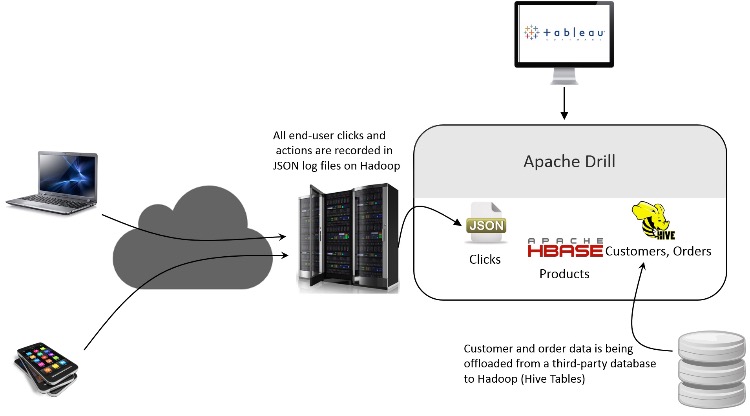
With this advance, by applying Dremel technology (Apache Drill™, below), the era of open source genomic data mining began.


The recent convergence of open source Cloud computing and gene sequencing scalability set the stage for the February 2016 Obama Administration’s Precision Medicine Initiative.


--------//--------

The last bottleneck is personal health information (PHI) privacy.

The press is full of shocking privacy breech stories involving healthcare insurance databases and EHR’s. Data sharing security concerns related to PHI privacy have resulted in increased regulatory hurdles, reducing data access and preventing research collaborations that could lead to real PM progress. 

In the end, the type of privacy required in the PM data sharing milieu boils down to math. At the 2006 Proceedings of the Association of Computing Machinery on Privacy, Stanford’s Philippe Golle showed that with an individual’s birth date and 5-digit zip code, there is a 63.3% probability that a U.S. person’s identity can be determined without any requirement for gender being known.

According to Stanford’s Somalee Datta (below... and yes… it auto-corrects to 'Data'), points-of-view on data privacy differ for patients (“My Health”), companies (“My Business”) and researchers (“My Research”).


Patients want better healthcare for their children, themselves, their extended families and community, and may be willing to accept the unknown risk and longer term implications of genomic data loss.

Businesses seek the value proposition associated with better healthcare for patients, but risk large scale hacking, malicious ransomware, bad press and loss of consumer trust.

Researchers’ end game is effective data use for new discoveries that improve health, and they are willing to tolerate complex data use agreements and/or negotiated service agreements for data access.

In order for bioinformatics to relieve this last bottleneck – timely data sharing with secure privacy protection – patients need transparency regarding the use of their data (informed consent), businesses require secure platforms that allow granular monitoring of data activity (like financial systems currently utilize), and researchers want workflow oriented bioinformatics suites that allow for flexible research plans (open access). 

--------//--------


PM sits squarely at the interface between genomics big data and immense computing power.

 How thinking humans grapple with this complex interface will define the usefulness of genomics data to the future practice of PM.

If PM’s future is to augur well, bioinformaticians must get more patients’ big data into the hands of more genomics researchers who work on more powerful open-source analytic platforms.

The precogs in the Square clearly see how the “kindly patronage and guidance” of patients, businesses and researchers produced PM's auspicious beginning.

But we worry that PM could crash to Earth if regulators fail to properly read the chicken entrails.