Tuesday, October 18, 2016

Uncertain Health in an Insecure World – 96


“H.I.”


Mahatma Gandhi was courageous… a visionary. He advocated for the right of all humankind to think freely – regardless of race, gender or caste. His legacy transcends the test of time. Indeed, human beings all have the capacity to think, albeit illogically and emotionally at times.


Human intelligence (H.I.) uniquely defines the human condition.

H.I. = I.Q. + E.I. 

The origins for the most widely used metrics of human intelligence, intelligence quotient (I.Q.) tests, can be found in the early 1900’s when H.H. Goddard proposed that intelligence could be measured on a linear scale. In the 1920’s, Lewis Terman predicted that California schoolchildren with the highest I.Q.’s would claim top professional jobs. In 1969, Arthur Jensen stated that I.Q. boosting programs for minority children like Head Start would fail because of an innate genetic basis for intelligence. In 1994, Richard Hernstein and Charles Murray proposed the Bell Curve concept that would segregate Americans with the lowest I.Q.’s into “high-tech” reserves. In 2007, James Watson of DN fame opined that he was “inherently gloomy” about the prospects for Africa, because Africans score lower on I.Q. tests than Europeans.


Biases in the application and interpretation of I.Q. testing are long, and deep. 

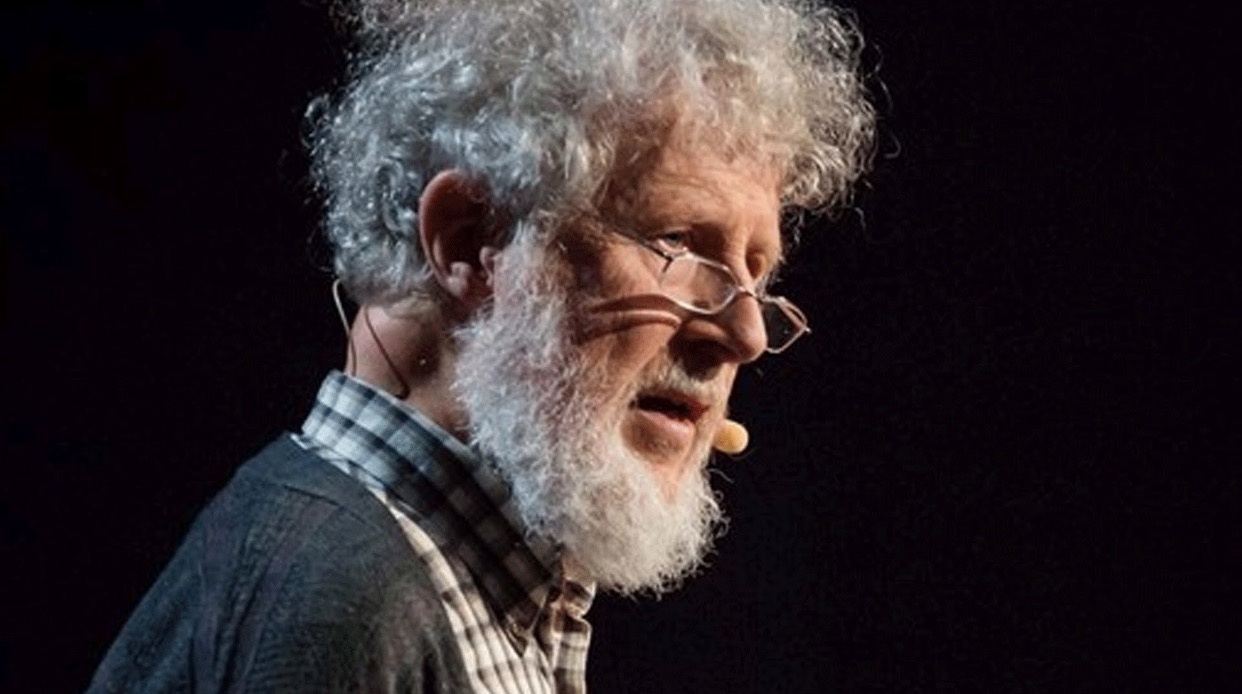
Amid such controversy, in 1984 a scientist at the University of Otago in New Zealand received the results of I.Q. testing from two generations of Dutch 18-year olds. After analyzing the data, James Flynn (below) found that those tested in 1982 scored much better than did those tested in 1952. These Dutch data were subsequently confirmed around the world – I.Q. scores were rising at a rate of +0.3 I.Q. points per year! The Flynn Effect has withstood the test of time. If extrapolated back, I.Q.’s among children circa 1900 would be 70 points, sitting squarely in today’s mentally challenged range.


Of course, post-WWII Netherlands was very different from pre-EU era Netherlands.

In What is Intelligence (2007), Flynn wrote about the “crisis of confidence” created by his Effect, openly questioning how it could be that children’s intelligence had changed so much over a century. Perhaps there were other testing factors, such as how questions were framed, that caused the Effect. One common I.Q. test (Wechsler Intelligence Scale for Children, WISC) asks the question, “Why are dogs and rabbits alike?” (Answer: both are types of mammals). This question might have been framed differently in 1900 when “you use dogs to hunt rabbits.” Human intelligence may be largely innate, but it also requires a cognitive frame of reference based in the modern world, whether circa 1900 or circa 2000.

Perhaps, intelligence is not only about how smart we are, but more about how modern we are.

The leadership literature’s most widely quoted basis for management success, emotional intelligence (E.I.) dates back to the work of Michael Beldoch (1964) and of Peter Salavoy & John Mayer, as popularized by social scientist Dan Goleman in Emotional Intelligence (1996).  E.I. reflects the human ability to recognize, understand and manage one’s emotions, and the influence of such emotions on others. Learning how managers’ emotions, especially under pressure, drive and impact the behavior of other people (positively or negatively) is one key to leadership performance. Goleman has attributed 67% of leadership success to E.I., as compared to I.Q. In large part, E.I. derives from an individual’s ability to process emotional queues and to navigate the social environment of the modern workplace.


But self-reported E.I. measurements have been criticized.

Tools like the Mayer-Salovey-Caruso Emotional Intelligence Test (MSCEIT) may actually be measuring conformity. The capacity of individuals to understand how they should channel their emotions does not accurately predict how they will actually perform under emotional stress. Scientists have also shown that general intelligence (Wonderlic Personnel Test), agreeable-ness (NEO-PI) measures and gender are also reliable predictors of E.I.

Socially desirable behaviors can be faked during E.I. testing.

There are wide ideological rifts between the “academic wing” and the “commercial wing” of the E.I. community. In 1998, Dan Goleman asserted that, “the most effective leaders are alike in one crucial way; they all have a high degree of what has come to be known as emotional intelligence… the sine qua non of leadership.” To the contrary, in 1999 John Mayer cautioned that, “the popular literature’s implication – that highly emotionally intelligent people possess an unqualified advantage in life – appears overly enthusiastic at present and unsubstantiated by reasonable scientific standards.” E.I. correlates poorly (ρ=0.11) with measures of so-called transformational leadership (Harms, Crede, 2010). And these correlations do not consider the effects of I.Q. or the big five personality traits (Joseph, Newman, 2010).
      
Despite such fundamental flaws and philosophical differences, E.I. traits do predict job performance.


I.Q. tests an individual’s ability to learn and retain new information. E.I. tests evaluate an individual’s capacity to deal with others when under personal stress.

As we observe the tightly choreographed words and behaviors of modern public “leaders”, whether elected or anointed, there is no shortage of raw I.Q. These leaders are often telegenic personas with a broad cross-jurisdictional appeal, or charismatic channelers of the emotions of a disaffected few. And while these leaders may exhibit a modicum of enlightened self-interest in the pursuit of their goals, one thing that is commonly missing is the personal sacrifice and utter selflessness of a Gandhi.

There are very smart and emotionally intelligent people in the policy, business and scientific worlds.

But to mouth the words of another… to answer before thinking… to offer vague open-to-interpretation positions to gain support… This is not the best reflection of human intelligence.

In his fearless dedication to the most abjectly poor and marginalized among us, Gandhi demonstrated very high H.I.. Increasingly, such human intelligence is either absent, or reflexively being delegated to NGO’s, governmental agencies or corporate CSR units. Today, the pragmatic goals of securing election majorities or growing company profits render such thinking a modern abstraction – an anathema – even in intelligent circles.


Until this week, when the Nobel Prize committee reminded us all of what a leader can do with brains, heart and the courage die in the peaceful pursuit of a cause. We in The Square congratulate Juan Manuel Santos of Columbia (below), the President of a country regaining its sanity and soul after these had seemingly been lost.


Three and a half months post-Brexit and three and a half weeks pre-Thrillary, our faith in human intelligence is restored… partially. 


Wednesday, October 12, 2016

Uncertain Health in an Insecure World – 95


“We Cry… They Laugh”


“When we are born, we cry…” From the outset, memory defines the human experience.


Westworld, HBO’s sci-fi reprise of the 1973 Yul Brynner film of the same name and genre (above), is set in a 19th century American wild west adult theme park populated by incredibly lifelike but sadly expendable cyborgs. Westworld’s plot centers around memory manipulation. Anthony Hopkins plays Dr. Robert Ford, the robot Maker. He places high-paying human ‘visitors’ in the town. The visitors are invincible, and have a license to kill the cyborgs with impunity.


When not being hunted down by visitors, Dr. Ford’s robots are failing due to planned software obsolescence and troubled operating system upgrades. Ford’s lead scientist worries, “We didn’t program any of these behaviors!” He quips that Delores Abernathy (below), the recurring cyborg lust interest of the vicious Man in Black (played by Ed Harris), “has been repaired so many times that she’s almost new.


Despite his compellingly lifelike artificial creations, Hopkins observes that, “This is as good as we’re gonna get. It also means that you must indulge me the occasional mistake.”

Despite ALL the popular buzz regarding the expected impact of artificial intelligence (A.I.) and machine learning on our future world, the actual ability of computers to understand the real world and respond intelligently remains largely unrealized.

A.I. is a construct that bundles three powerful technologies – the Cloud, mobility and big data – for average human consumption. Current gen A.I. can produce a scary movie trailer and pilot a flying drone. More importantly, A.I. can process big data at scale while continuously learning from myriad transactional experiences. Google’s engine searches billions of web pages to find exact information, increasingly tailored to our prior searching histories.

A.I. may help mere mortals cope with the awesome complexity of what’s generally becoming available for human sampling.


Venture capitalist and Netscape founder Marc Andreessen (above) is optimistic. He points to “breakthrough after breakthrough” since the 2012 ImageNet competition, where A.I. image recognition offered powerful enhancements to radiology and to other image-based video technologies like Freenome’s blood biopsies for cancer diagnosis. “Part of the breakthrough on ImageNet was the sheer size of databases you (a small start-up company) could train the algorithm against.”

Perhaps A.I. will make us better at the things we humans already do best.  

As manufactured goods become cheaper, Baumol’s cost disease (a.k.a the Baumol effect) states that salaries rise in sectors that have not increased labor productivity, in response to rising salaries in high productivity sectors. Whether intelligent or not, a big chunk of rising healthcare costs is attributable to humans being hired to spend time with customers (patients). Andreessen riffs on Baumol’s effect, stating that “This is where the Luddites just keep getting it wrong. I think the job of a doctor shifts and becomes higher level… as the doctor becomes augmented by smarter computers.”  
 
Can A.I. actually potentiate the prowess of doctors working in such an unproductive sector?


Ginni Rometty, IBM President and CEO (above), thinks so. She talks about the “explosion of information” confronting the modern consumers. She believes that IBM Watson’s machine learning A.I. technology can help us make “better decisions.” She too prefers the term “augmented intelligence,” as a less threatening conceptual framework. Watson can indeed search millions of published medical research papers (terabytes of data) from highly diverse sources in seconds, generating predictive algorithms that could augment patient care in real time. Rometty won’t indulge in saying that Watson can make better oncology diagnoses than doctors; she does think it will give doctors more time with their cancer patients.


In 2011, IBM Watson was only 32% certain of its winning answer in final Jeopardy. That’s just a little better than a guess. Unfortunately, 2016 Watson (above) remains unproven in the real world.

Question – why is sarcasm so hard for A.I. machines to master?


Oscar Wilde called sarcasm “the lowest form of wit.” Harvard Business School researchers think it’s “the highest form of intelligence.” Cognitively speaking, sarcasm is one of the most complex forms of human expression. While voice recognition and machine translation are constantly improving (just ask Siri), the unique and highly individual traits of verbal & written sarcasm still defy A.I.

Humans with brain dysfunction like autism and fronto-temporal dementia also struggle with sarcasm.
Only healthy human brains can de-convolute the juxtaposition of a sarcastic statement’s literal and intended meaning. Selling sarcasm to someone else involves nuanced facial expressions and/or vocal tones. That’s why expressionless hash tags and ambiguous emoticons can make tweets misleading for humans reading them, and for ‘bots’ scanning Twitter feed.

In 2014, the U.S. Secret Service issued RFP HSSS01-14-Q-0182 for analytics software with “the ability to detect sarcasm and false positives” on social media, as a way of trolling for terrorists using “snark” to disguise their evil plots. Advanced deep-learning machines can now detect sarcasm with 87% accuracy as compared to humans. Uncle Sam’s RFP remains to be awarded.


The situational awareness and worldly knowledge framing sarcasm still exceed the capabilities of A.I.

Triggered by a visitor’s dropped photograph, Delores Abernathy’s robot father, Peter (below), experiences a memory. As Dr. Ford readies a thus damaged Peter for decommissioning, he asks him, “And what do you want to say to your Maker?”


At the moment of his machine death, instead of crying, Peter laughs and replies, “By my most mechanical and dirty hand I shall have such revenges on you... The things I will do; what they are yet I know not, but they will be the Terrors of the Earth. You don’t know where you are, do you? You’re in a prison of your own sins.”  

Like other intelligent humans, we in The Square remember, and harbor artificial intelligence doubts.

Responses to the endless enormity of worldly information differ.

We cry… they laugh.

Exactly who among us can say they are better?


Thursday, September 29, 2016

Uncertain Health in an Insecure World – 94


“Precise”, or Good Enough?


During World War II, the term “good enough for government work” meant that something being produced in the war effort had passed the most rigorous quality standards. Government-issued contracts for war munitions, ships and aircraft required the highest level.

After all, G.I.’s lives were on the line.


Since the era of The Greatest Generation, this term has assumed a pejorative meaning, suggesting that the work involved is either poorly executed and/or overpriced. The Reagan era Pentagon defense buildup was plagued with reports of $400 hammers and $600 toilet seats on Orion anti-submarine aircraft, implying governmental tolerance for colossal waste.


After all, national security was on the line.

In 2011, the U.S. Center for Medicare & Medicaid Services (CMS) admitted to making $70B in improper healthcare payments. So far, the 2010-2020 Obamacare policy funding envelope has increased access to healthcare for ~20 million Americans at a projected cost of $788B – that’s $4M per year for each newly-insured person! Ironically, this law now exacts high cost accountability from healthcare providers.

After all, there are covered lives on the line. 
  
To be clear, the goal of Obamacare is not universal coverage. Nor is it better population health. Nor is it improved quality of life. Cynically stated, Obamacare is largely system change for change sake. And the nemesis of all such massive government initiatives anywhere around the world is anti-change bureaucratic entrenchment. In an election season such as this in the U.S. (unlike any other?), at the core of this “good enough for government work” policy reform is political advantage.

After all, presidential aspirations and legacies are on the line.


Approaching The End, the Obama administration has decided to not make expanded healthcare insurance The Main Thing. Instead, in January 2015, they moved to misdirection. In rolling out the Precision Medicine Initiative (PMI), the U.S. President (above) announced that, “Doctors have always recognized that every patient is unique, and doctors have always tried to tailor their treatments as best they can to individuals.” He added, “what if figuring out the right dose of medicine was a simple as taking our temperature?”

Compelling stuff!

However, even if you’re the U.S. President posing beside the DNA molecule, that is not exactly PM.


The Cancer Moonshot 2020, chaired by U.S. Vice-president Joe Biden (above), was also launched in January 2016. Since the 1960’s, space travel has been more about geo-political advantage than scientific reality. Apparently, now cancer scientists have The Right Stuff! But if/when funded, this particular cancer moonshot isn’t going to land on the surface of a cure by the end of the decade, no matter that as a public initiative, it’s uplifting… even inspiring.

It and the PMI are both largely popular misdirection. And as Shakespeare wrote, “there’s the rub.”

Brilliant scientists are (generally) not great doctors, and vice versa. Sure, science informs modern medicine. But medicine is not the hypothesis-driven art of The Possible.  There’s a reason that jurisdictions don’t license smart Ph.D.’s to also practice medicine.

That being said, Dr. Ricardo Sabatini (below) is one brilliant scientist… a physicist, to be precise.


If you listen to his April 2016 TED Talk, I’m sure that you’d agree. During his fascinating description of DNA’s complexity, he welcomed Craig Venter (another brilliant scientist… a pharmacologist, to be precise) onto the stage. But Dr. Venter wasn’t there in the flesh. Sabatini unveiled a 450 kilogram 262,000 page encyclopedia listing all the DNA base pairs in Craig Venter’s personal genome. As Dr. Sabatini read Venter’s code of life to the audience, he turned the page to chromosome 14 in volume 132… “ATT, CTT, GAT…” After the laughter died down, this serious scientist pointed out how missing just two letters in this particular genome position would cause incurable cystic fibrosis (CF).

Let’s all agree on something – reading a normal gene sequence aloud, even from the pages of such a marvelous book, won’t cure CF any more than reading IKEA assembly directions in Swedish will magically put the furniture together.


When the actual Dr. Venter (and his business partner Peter Diamandis) created Human Longevity in 2014, they dreamed of translating the genome into improved human health. They marketed this approach, and the code of life concept, as the logical PM path forward. Their company employed 40 brilliant data scientists and used machine learning to read, re-read, and then interpret The Book. This actually allowed them use genome information to predict the features of a human face! And on the face of it (Sorry!), the results (below) are pretty precise and quite amazing!


But exactly how does all this massive data and scientific brilliance get translated into clinical medicine?

In the New England Journal of Medicine (NEJM, August 25, 2016), Dr. David Hunter (M.D. and Ph.D.) provided his perspectives on ‘Uncertainty in the Era of Precision Medicine’. First, he pointed out that the National Research Council (NRC) definition of PM “refers to the tailoring of medical treatment to the individual characteristics of each patient.” He reminds us that the NRC views the word “precision” as colloquial, meant to imply accuracy and a modicum of certainty in an outcome.

Dr. Hunter boldly predicted that precisely the opposite will probably occur in clinical practice.

He noted that, “tailoring treatments may demand greater tolerance of uncertainty, and greater facility for calculating and interpreting probabilities than we have been used to as physicians and patients.” In practice, oncologists and cancer patients must contemplate the relationship between the clinical and genomic risks of outcomes (i.e., metastatic tumor spread, survival, etc.). These risks are not always symmetrical. Dissecting a NEJM study of 6,693 women with breast cancer, Hunter reported that 70+ separate gene-expression tests carried out by scientists had to be dichotomized into ‘high-risk’ and ‘low-risk’ to permit clinical trial data analysis. If complex continuous genomic variables cannot be understood by physicians, then genetic profiles cannot inform patient choices regarding toxic cancer chemotherapy.


Sometimes, high science must be dumbed down to be “good enough for clinical work.”
  
To actually save lives, omics testing information must be integrated with clinical prognostic variables and tumor immunohistochemistry results. Until ~15 years ago, these clinical-pathological correlates were considered “good enough for clinical work.” In most community-based medical oncology practices, the drugs of choice are still cytotoxic platinum chemo agents. Omics has helped scientists to rewrite The Book. However, knowing the code does not reveal the subtle plot twists, the protagonist’s weaknesses, or the tragic themes in the patient’s history. Simply reading the CGAT’s aloud from The Book’s pages leaves many clinicians in the audience bewildered.

Clinical experience, not big data, remains the domain of doctors.

Assessing medical value, and enacting care properly informed by the probabilities, requires a straight-forward presentation of the options (and tradeoffs) by doctors for patients to absorb.


Widespread backlash to government actions is often fueled by press coverage. You hear what you want to hear in a news story. So to be precise, we now know that the Reagan Administration gave >$10M in arms illegally to Nicaraguan Contra rebels in 1986 using the tainted profits of arms sales to Iran. But to be clear, the complex plastic shrouds on Lockheed P-3 Orion aircraft (below) flying long-range high-risk anti-submarine missions are not toilet seats.


The same eye-of-the-beholder rule also applies to PM. 

We in The Square know that good science requires Precision. We also know that Medicine is often messy.

And while potentially compatible, these two truths are not mutually exchangeable. 


Thursday, September 8, 2016

Uncertain Health in an Insecure World – 93


“Swan Song”


Ancient mythology holds that swans, largely hissing or silent creatures in life, sing a beautiful song in the moment just before death. Like humans, swans are biologically inclined to mate for life.


Etruscan bronzes and painted ceramics offer pictorial motifs of the passion of Tithonus for Eos, the Titan of the dawn (below). Greek mythology recounts how Eos asked Zeus to grant her Trojan lover immortality. Zeus granted her wish, literally. But Eos forgot one vital thing… to request that eternal youth accompany Tithonus’ immortality. Eventually, with the passage of years, Tithonus withered into a cicada.


Alfred, Lord Tennyson’s eponymous epic poem, Tithonus (1859), described his infernal decay.
“And after many a summer dies the swan,
Me only cruel immortality, consumes;
I wither slowly in thine arms,
Here, at the quiet limit of the world…”

Since Tennyson’s day, human longevity has crept towards the current 120 year ceiling.


In most organisms, aging processes are inversely proportional to lifespan. “Aging is the gradual loss of molecular fidelity after reaching sexual maturity, culminating in the loss of function (“senescence”) and ultimately in disease and death” (Sen et al, Cell, 2016). In yeast, a maximum number of mitotic cell divisions are followed by a chronological lifespan – the time a cell can survive in a post-mitotic state.

Epigenetics - aging science - explores the cell-based limitations to longevity.

The complex relationship between nuclear chromatin that wraps around histone proteins to form DNA, and enzymes called epigenetic factors, allows (or deflects) access to DNA by transcriptional mRNA copying machinery. At a cellular level, aging is greatly influenced by environmental stimuli and nutrient availability, which contribute to the loss of histones, remodeling of chromatin, and changes in DNA methylation.

Epigeneticists propose that these aging contributors are modifiable, and as such, potentially reversible.

Age is the most powerful contributing risk factor to chronic illnesses like cancer, cardiovascular disease and neuro-degenerative conditions. The central basis of aging (and many diseases) is related to inborn genetic differences and subsequent somatic mutations. This biological maxim is inexorably true of simple single-cell organisms, and of complex beings like humans. 

Jumpy bugs are a new model for epigenetic aging studies.


Social insects like the Indian jumping ant (Harpegnathos saltator, above) provide interesting insights into the epigenetic mechanisms of aging. Remarkably, a worker ant can replace the queen in the colony, and acquire greater longevity, renewed reproductive functions, and the loss of worker behaviors. Of interest, these changes can be reversed! The H. saltator Genome Project has sequenced this ant’s genes. There is up-regulation of certain aging-related genes in the longer-lived reproductive H. saltator ants, and in the expression of SYMD histone methyl-transferase enzymes in select castes within the colony (Bonasio et al, Science 2010).

Long-lived deep-water species may hold the key to understanding the biology of aging.


Arctic water Greenland sharks (Somniosus microcephalus, above) are slow growing, slowly metabolizing creatures that can live for more than 500 years (Nielson et al, Science 2016). With no natural enemies, this species sets the vertebrate longevity bar. These sharks have high concentrations of nitrogenous waste products (urea) and trimethylamine-N-oxide (TMAO) in their tissues, which serve to protect their cells’ osmosis and to increase their water buoyancy. While urea renders their tissues poisonous to predators, TMAO’s counteract the protein-destabilizing effects of urea. Inuit people believe that this behemoth’s bitter flesh acts as a spirit helping to empower their shamans.

The business of staying young has always boomed. Now serious aging science is adding to the mix.

But is science lending real (or false?) hope, and creating endless (or self-perpetuating?) complexity?

Better nutrition and anti-senescence drugs may retard DNA damage and cell dysfunction. Exercise and medical devices can transiently restore physical prowess. Organ transplantation (begun in 1954) could be extended by CRISPR gene & enzyme editing, and expanded by xeno-grafting & 3-D printing to grow new organs. But as noted in The Economist (August 13, 2016), the enormous cost of these “death cheating” interventions creates societal pressures and causes healthcare access inequities.

Average lifespan around the world is primarily a reflection of ‘macro-epigenetics’.


Global population health is mostly related to exposure to air-borne pollutants (above) and environmental toxins, and to the availability of nutritious food and clean water. The Guardian (September 3, 2016) reports that the U.K. charity Children with Cancer has seen a +40% jump in the diagnosis of cancer among teenagers & young adults aged 15 to 24 since 1998. The sanitized version of the cause of this shocking rise is “modern lifestyle”. But obesity, pesticide & solvent inhalation, power lines & magnetic fields, mobile phone radiation, and airborne pollutants are not really novel lifestyles.

Aldous Huxley’s novel, After Many a Summer Dies the Swan (1939), tells the story of a Hollywood magnate who employs a scientist to help him achieve immortality. The Silicon Valley (2016) is full of billionaires investing millions in the science of longevity.


The X-Files scripted sci-fi series season 6 episode Tithonus (1999), recounted the strange story of Alfred Fellig, an immortal photographer. Fellig snapped photos of people on the verge of death (above), appearing to him in shades of gray, in hopes of finally meeting his maker and ending his own cursed long life. For the rest of us, the enormous challenges presented by long life – societal, medical, scientific and ethical – are less metaphysical than physical.

Society is growing confused as to what to do for, and with, the very elderly.

 Science might slow human senescence, but aging per se remains unstoppable.

Tennyson spoke to the futility of fighting the passage of time… “The Gods themselves cannot recall their gifts.”

Eos left Tithonus when his hair turned gray. Lonely, Tithonus wandered her castle until the moment of his human death. As a cryptic cicada, he sang loudly, but only at night, to avoid predators.


If neither the Gods nor man see the long-term benefit of longevity, why then, does the multi-millennial multi-billion dollar quest for longer life continue?

We in the Square who have just passed life’s mid-point remain, in equal parts, puzzled and expectant.

Wednesday, August 31, 2016

Uncertain Health in an Insecure World – 92


“Leitmotif”


Life offers up subtle themes and catch phrases that connect deeply to the human mind. When music powerfully evokes a particular person or place, like the animal characters in Peter and The Wolf (Sergei Prokofiev, 1936), it’s called leitmotif.


Leonard Cohen wrote of such evocation in his folk gospel anthem, Hallelujah:
“Now I’ve heard there was a secret chord,
That David played, and it pleased the Lord… 
Well, it goes like this, the fourth, the fifth,
The minor fall, and the major lift,
The baffled king composing Hallelujah…”


Such soulful notes resonate to the very core of our beings.


Bono has called Hallelujah, “the most perfect song in the world.” But it didn’t become popular until decades after it was written in 1984. The head of CBS Records called it “a disaster.” The Rolling Stone review of the album, Various Positions, did not even mention the song. Velvet Underground’s John Cale covered it beautifully in his 1991 Cohen tribute album, and Jeff Buckley breathed life into it in 1994 three years before his death. But there was only a ripple of interest. It was only when Rufus Wainwright resurfaced it in the 2001 Shrek movie soundtrack that public awareness grew. 

Is there magic to making musical hits?

University of California at Berkeley engineers studied the structure of 1,300 songs to determine what makes popular music move the human brain. Their ‘hook theory’ posits that certain chord progressions are more pleasing to the ear. Many pop songs are written in the easy to play keys of C or G – they are full of those common chords – so no surprise there. Songs in the key of C (and its relative minor, A) are by far the most frequent. F and G chord progressions are also very common (above), lending to the common criticism of formulaic “four chord pop songs” featuring C, A minor, F and G chords. Songs written in C major (or I) are best wrapped up with G major (or V) chords. That’s why the G to C (or the V to I) chord resolution is so common in popular music.


However, as pointed out by lead hook theorist, Dave Carlton (below left), some of the greatest pop songs eschew this convention, using the F chord (IV) before the C major (a IV to I chord progression) to great effect: Let It Be (The Beatles, 1970, above), Don’t Stop Believing (Journey, 1981), She Will be Loved (Maroon 5, 2002), I Need You Now (Lady Antebellum, 2009) and Edge of Glory (Lady Gaga, 2011).


Carlton notes that classical musicians use different chord progressions when composing. And even pop song writers with classical training – like John Mayer (1998 Berklee School of Music graduate) in Who Says (2009) – approach the composing craft differently. Philadelphia public radio WHYY Radio Times host Marty Moss-Coane explored the musical success formulas behind the classic pop songs of summer. In July 2014, she interviewed Ryan Mikayawa, another UC Berkeley hook theorist (above right). Mikayawa noted that the unique chord progressions in John Legend’s All of Me (2014), while reminiscent of some prior hits, were neither plagiarized nor formulaic.

What does music do to the human brain? Well, if you’re a pop music megastar, different things.


When visiting Montreal in July 2007 for The Police’s reunion tour concert, Gordon Matthew Thomas Sumner (a.k.a. Sting, above) agreed to undergo a functional magnetic resonance imaging (fMRI) brain scan at McGill University’s Montreal Neurological Institute. The lead MNI psychologist, Dr. Daniel Levitin, asked him to listen to music during the fMRI, which showed that “pieces of music that you or I wouldn’t have seen as similar, his brain saw as similar.


Sting’s brain triggered similar patterns (below) when listening to his Englishman in New York, and to The Rolling Stones’ (I Can’t Get No) Satisfaction – both songs start with a low E on the bass. Again, when Sting listened to the Beatles 1960’s hit Girl and Astor Piazzolla’s composition Libertango – both in minor keys with an identical 3-note motif – his cerebellar fMRI activity was comparable.

Remarkably, normal non-musician volunteers’ brains did not make these subtle connections.


Can restoring normal brainwaves help to treat brain injury and disease?

A line of research led by University of Toronto neuroscientist Dr. Luis Fornazzari has shown that artists and musicians suffering from multi-stroke vascular dementia can still express art from memory, even when they fail completely at simple daily tasks and recent event recall.  “Due to their art, the brain is better protected [against] diseases like Alzheimer’s, vascular dementia and even stroke.” Fornazzari believes that, “… the talent and the art per se gives [them] reserve when the brain requires that reserve.” One of his severely affected dementia patients, Mary Hecht, was a sculptor. Mary quickly sketched a portrait of cellist Mstislav Rostropovich (below) when she heard of his 2007 death over the radio. While drawing, her thoughts were clear and her words articulate – otherwise, she couldn’t tell time, remember simple words or identify certain common animals.


So there is neuroscience to music.

In artists, it connects brain patterns and reconnects lost memories.

And exposure to music does rewire neural circuits.

In children, it helps with focus, memory and attention skills.

There is a secret chord.

“But you really don’t care for music, do you?”

Although baffling to some, we in the Square still listen, in search of the divine.  

Wednesday, August 17, 2016

Uncertain Health in an Insecure World – 91


Monkey Mind


Buddha was part messiah, part psychologist.

Some 2,500 years ago, Buddha watched crazed monkeys flinging themselves through the treetops… jumping and chattering non-stop. Buddha related these non-human primate antics to the world’s constant clammering for the human brain’s attention. Taming this “monkey mind” through meditation would release a higher power, and offer transcendence towards a deeper state of consciousness.


So just “Where does the mind stop and the rest of the world begin?

The mind-brain interface is a centuries-old conundrum that remains at the center of this debate. Concrete thinkers (scientists) support the skull-skin demarcation. Abstractionists (philosophers) hold that the mind’s effects are projected externally. A third more modern school of thought reflects an active role of the environment in driving cognitive processes.


In 1998, Andy Clark and David Chalmers (above) described computer interactions with the human mind in an article titled, The Extended Mind. They depicted human problem-solving – the precise placement of geometric shapes into sockets – in three ways. In one approach, humans asked the computer questions that mentally maneuvered the shapes until they fit. The second operator physically manipulated the computer screen image until alignment occurred. Finally, in what the authors’ projected as the “cyberpunk future”, a third operator with a neural implant performed both mental and physical rotations faster than ever. The Catch? – the neural implanted operator must choose which mode to use based on differing demands for attention and impacts on other concurrent brain activities.


This prescient philosopher duo suggested that the neural implant scenario was not “exotic”, and that rapidly advancing computing power had provoked this very issue. They posited that human reasoners lean heavily on any and all available external supports. Computations once done with an abacus or using pencil & paper gave way to the slide ruler, were supplanted by the digital calculator, and then made obsolete by the computer microprocessor. Despite initial resistance to the extended mind theory (EMT), modern mobile device technology now rings their hypothesis true.

Enter social media.

An old adage holds that you need to repeat things 7-8 times for some people to “get it.” Today, social media provides 70-80 repeats a day. Scientists understand that in any human-computer interface, the brain shares internal tasking operations with externally modulated inputs. Social media influencers count heavily on such cognitive manipulations for their follow “success.”


Now wrap your head around the mind-device interface.

Modern mobile devices are more than inert tools. They’re an extension of the human brain… potentiating a higher consciousness. The technology we use becomes part of our mind – integrating without being physically implanted. For centuries, we’ve extended bodily functions with technology – wheels, prosthetics, cars, canes, even electric guitars. Wearable devices now enhance sensorial perception.


Healthy humans have surrendered a number of basic brain functions to technology.

iPhones need not be implanted in our brains to influence our minds. For example, they offer a conveniently mind-numbing alternative to number recall, day planning functions, personal navigation, etc. Blind persons can use iPhones to register their surrounding topography in ambient colors, providing visual imagery far beyond simple glass lenses.


Alzheimer’s patients get a memory boost from external cues, like refrigerator Post-it notes.
Brain chauvinists overvalue what is happening in the brain (biology), versus the external drivers of what the brain is doing (technology). Consciousness offers us mindfulness (philosophy), but true feelings reside at the psychic core of our minds (psychology). Mercifully, none of these “-ologies” are reproduced by artificial intelligence... Yet!

Increasingly, our minds exists outside our consciousness.

Go ahead and query Siri – “Is my iPhone an extension of my mind?” Her simple answer is, “Interesting question.” Then ask her, “Is my mind an extension of my iPhone?” Siri promptly directs you back the EMT and to Andy Clark’s 2009 book, Supersizing The Mind.

Neither philosophers nor Siri do well with such untenable dualisms.   


Give a monkey an iPhone, and… it wants a banana.” (… so you fill in the blank). Seriously, unlike we evolved (read technology-addicted) humans, monkeys can turn their brains off from such externalities. So for non-human primates, at least, there’s hope.


The movie Futureworld eagerly awaited The Extended Mind. But make no mistake – as in 1976, in 2026 there will be a final reckoning.

We in the Square want see what an iPhone-12 can do for the primate mind.

But for now, the human price of technology is clear.

It’s the monkey mind!